






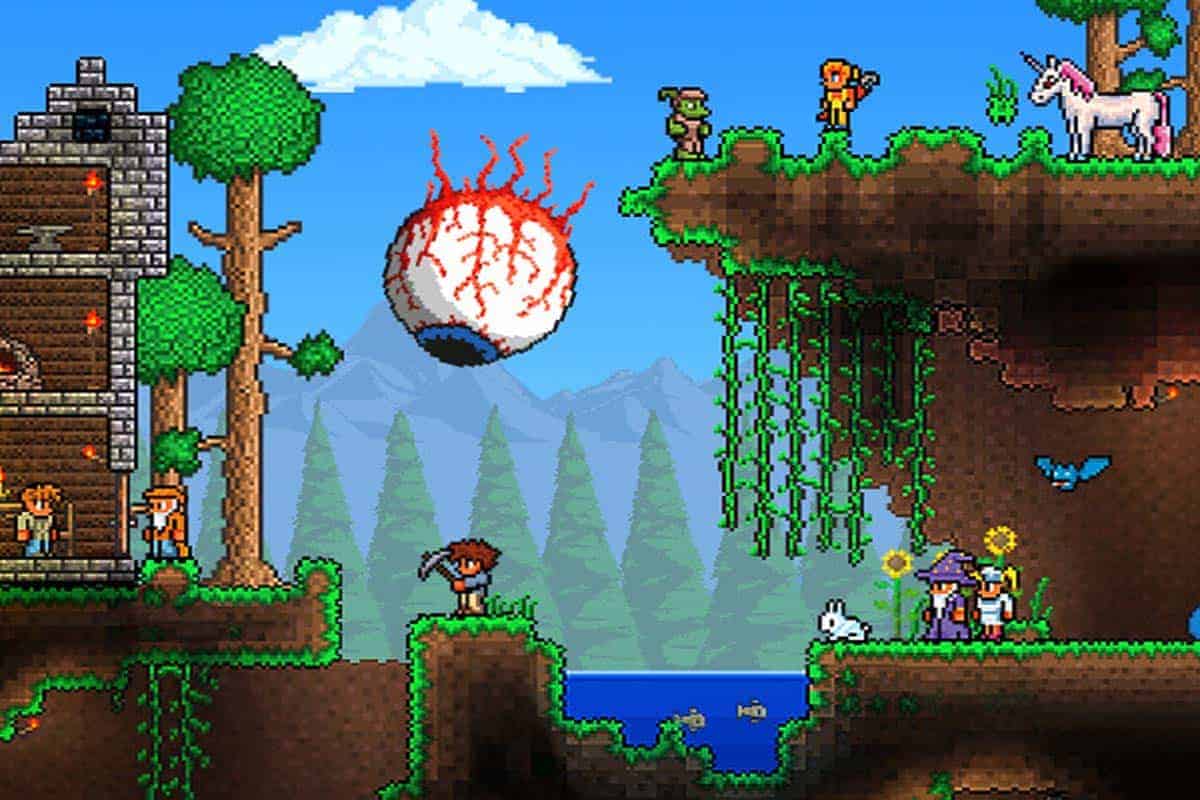
Corruption is a general issue that happens around the world, and even a man on the streets can understand what corruption means. However, Terraria is a game made by the Microsoft Windows company and has its features in different platforms, an action sandbox game by re- logic, a game company of Microsoft. Corruption in Terraria is about a particular part of the game based on underground bribery, and it is a 50% chance of survival because of the corrupted parts around the game.
A look at how to stop corruption Terraria
In the game, corruption spreads. However, in looking at how to stop corruption Terraria, we must understand that to get rid of it, you have to be in charge after defeating the wall of flesh, which is present in the hard mode. Then it becomes aggressive and spreads faster, so for it to reduce, and way off, you will have to defeat the planter, the speed then goes in half from that 50% it carries. The hard mode is where it mostly comes and even affects the deserts into corrupted deserts.
Keep reading for quality information regarding this topic!
Terraria Game
It is a sandbox game and is a fascinating one at that. With the lockdown or isolation going on, you can download or install it and play and have fun with it. The game made based on Microsoft Windows.
It is present in the Windows phone and other online stores. It is a 2D game that features crafting, building, how to explore, and combat. It has a single, and multiplayer mood which is very interesting, having a multiplayer attitude in a game is fun because you would want to defeat your opponent and you are well prepared to do so.
In this game, playing multiplayer is very interesting, and it comes with a lot of fun and joy in it. It is similar to Metroid and Mine craft. A small game character with a pickaxe, sword, and woodcutter for different things placed in the game as you begin to play. The player makes out with everything he or she sees in the game
There are enemies in every game we play, something or someone in the game that will stop you from reaching the goal of the game. You won’t be able to make it to the next mood in the game if you don’t finish them off. The player would encounter several enemies in the game.
The player can’t fight all those things he or she have because it is not enough and can’t fight them off. More notably, the boss of bosses is those that bring out much equipment and, as such, are dangerous and cannot face a regular defeat. The game has a progression with the losing the bosses, which sometimes comes out without you knowing, and the problem is, are you loaded with what can defeat it.
In the Terraria, there is something they call NPC, non-player characters which surface with the coins you get in the game, medals or awards every game gets as you play you win them or you collect them. Sometimes you take them when you defeat a particular enemy like the bosses.
These NPCs are there to help you out with some of the things in the game, when you defeat the boss you can attract an NPC which will help you by occupying some structure built or rooms in the game, like a wizard, nurse, etc.
Those coins come in different types like gold, silver, platinum, etc., to enable excellent transaction with the NPC. Then the NPC will then reside in the player’s house like the wizard or mechanic. The corruption as well as Crimson biomes is an area or a different biome in which the player expand when it gradually overtakes and converts blocks that are in the adjacent biomes.
The underground corruption where the player will summon the boss and then defeat it and move to the next mood, which is the hard mood, and after that getting new scores, items, gifts, and even new biome that bears the name, hallow.
After the hard mode, the game enters the expert, which is the first and last part of the game, significant difficulty in the experts. It requires you to build your world of the game, having to face new enemies, getting new NPCs, seeing new bosses and awards, coins, etc. Everything changes, and you have to play still cool and win.
Terraria To The World
The game came into existence in 2011 and since then has been making waves around. It has been updated on different occasions and has features for various platforms.
The 1.3 was then released later end and received favorable comments on how everything changed automatically, and the new biomes added. The game sold 30million copies around the world, and they announced the final stage of the game, which will ready and updated this year called the end of the journey.
Re-logic has been making sure the game’s updates are fresh and exciting before releasing, and so Terraria is a fun game. It also involves an intellectualist in playing it, especially when playing the multiplayer aspect, which has upgradeable features to give better gaming experiences, the x-box and play station platforms, also the Android element.
The game has a design that runs on Microsoft Windows, and so its first release in 2011 was in Microsoft Windows before been ported to iOS’ version, Android version, and other versions.
Stopping The Corruption In Terraria
Corruption in Terraria happens to be the evil biome that has decay and death theme, also a wasteland that is purple, just like every other biome. However, it is different in some ways. The Crimson which it contains one or two made up generally and randomly with effect to only appear or occur if appropriately calculated to be 50%.
The player world creation can be done either in a desktop or a console version. Many unique tools and equipment will pop off and new enemies, weapons, armor through corruption materials, which is faster and is better off than the crimson materials.
The corruption enemies have lower stats, in the area of damage, defense, and health. The underground corruption biomes can blow up with high explosives or death bringer pickaxe, which is also higher.
Corruption then spreads like wildfire, causing it to slow the tiles that are adjacent to the Corruption variants. Chasms and other biomes will be updated and then will rise and won’t grow in Corruption area which came as a result of spreading. Where enough corruption takes over the new city, everything changes in that part of the game.
An area cannot be the corruption biome if notwithstanding 200 tiles linked with corruption grass or corrupt blocks present. This corruption is substantial interference in the game and needs to be off, so it won’t cause you not reaching the goal.
Characters In The Underground Corruption And How To Stop Them
There are several characters in Terraria. At the Pre-hard mode, we have Soul Eaters and World Eaters. At the Hard mode, we have Corrupter and World feeder. At the Corrupted dessert, we have Shadow mummy and Dark mummy. Finally, at the Unique treasures, we have Musket and Vile thorn.
To stop Soul Eaters, you have to attack with the shadow armor, while for World Eaters, the shadow scale is the approach. You use vitamins to stop corrupters, cursed flame to stop world eaters, and blindfold to stop shadow and dark mummies.
The corruption biome can’t spread through hallow and does not sourness the underground and carven enemies. The monsters that you find in this biome at any time of day are relatively stable and acts as an excellent reason to avoid corruption at the beginning of the game.
Also, most monsters appear to be worms as well as the boss. So with great difficulty, since it’s the hard mode when this happens, it is better to be prepared so to be on the safe side because the bosses will be more influential, and after killing the wall flesh, it spreads twice and becomes worst and more prominent in defeat.
The cheapest and fastest way is to dig a hole that is horizontal, six blocks wide, three blocks deep, after which you fill it with non-biome blocks, which can’t pass through or spawn from somewhere.
You can also blow up the corrupted areas or make a preservative around that base, which is hard and costs more as a way of defeating it. The hard mode brings more corruption, and so it is better to be fast and not to fall off.
Conclusion
Corrupted Terraria is easy to clear off with good focus, and you can see how to pass the stages and reduce casualties. The game has challenging modes because of the new features of its current edition. The biomes are corrupt, so using or buying some of the things needed to stop it will be a win for you. Now you understand how to stop corruption Terraria.
You May Like These Articles As Well:
How To Calculate Passive Perception: A Simple Guide On How Intelligence Works In-Game
What Do Stars Look Like Up Close? A Closer Look At Stars In The Galaxy
How Can I Get My Audit Number Online- What You Should Know About Your Audit Number?