






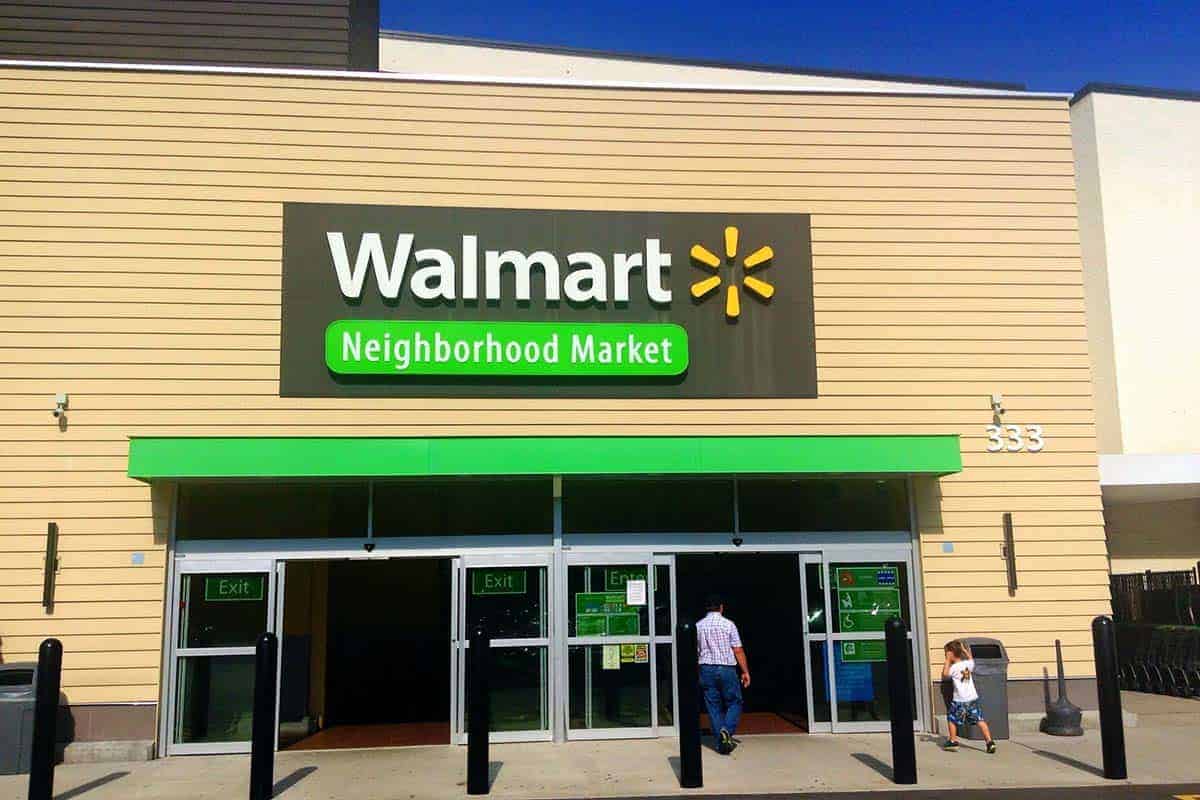
Walmart has been able to nurse its reputation as one of the biggest brands out there. This can be traced to its consistency in service delivery as well as its unique ability to meet the needs of its customers regardless of their location or class. Walmart is an American retail company that runs a chain of discount department stores, hypermarkets, and grocery outlets. The company is a product of the vision of Sam Walton back in 1962 and it was officially incorporated in 1969. The company also operates and owns Sam’s Club retail warehouses. With over 11,400 stores and clubs in 27 Nations, Walmart is one of the largest companies in the world. But, what is a Walmart neighborhood market?
What is a Walmart neighborhood market?
A Walmart Neighborhood Market is your normal grocery store and they usually do not provide the services which other supercenters provide. They however usually have the kinds of things you may not find in a regular grocery store. These include cleaning supplies, food, pet supplies and other kinds of supplies. They also have bakeries, pharmacies, and the likes. Walmart Neighborhood Supermarkets are about a fifth of the size of a regular Walmart Supercenter. They often average about 43,000 SF and have been functional since 1998. The core mandate of these markets has always been to supply meat, organic produce, and meat. This is the main reason why such stores have green signage against the blue.
Within Neighborhood markets, you will also find fuel stations as well as free store pick-up services that are useful for online orders.
What Is The Size Of Walmart?
Walmart holds the unique reputation of being the largest company in the World in terms of reputation. It is estimated to have made about $514 Billion in 2019. It also holds the unique record of being the biggest private employer of labor in the world with a workforce of 2.2 million employees. It is also traded publicly even though it is owned by the Walton family. The heirs of the founder own over 50 percent of Walmart via Walton Enterprises and through personal holdings. Walmart was ranked as the biggest retailer in America in 2019. Also, about 65 percent of the sales recorded by Walmart in 2019 were from its US market.
Walmart got listed on the New York stock exchange in 1972 and by 1988; it became one of the most profitable retailers in America in terms of revenue by 1989. Walmart was initially limited to the Southern and Midwestern parts, but it began spreading during the early 1990s.
What Is The History Behind Walmart Stores?
Back in 1945, a former employee of J. C. Penney purchased one of the stores belonging to the Butler brothers. The core mandate of this startup was to sell products at low prices to get higher volumes of sales at lower rates. This was a sort of radical shift from the norm. he, however, faced several set-backs due to the high running costs. He was soon able to find less expensive suppliers compared to those used by other stores around. He was eventually able to sell at a price less than his competitors.
He witnessed a 45 percent increase in sales in the first year of his own with about $105,000 in revenue. This revenue witnessed an increase to $140,000 the following year and continued experiencing great growth in the years to come. At a point, the lease to his store expired and he was unable to reach an agreement to renew it. This lead to him moving to where is now known as Walton’ss Five and Dime.
From One Store To A Mega-Chain
To better appreciate the journey of Walmart to where it is today, it is important to look at the steps taken by the company on this path.
The first discount city store was launched in 1962 in Arkansas. Within five years of operation, the company saw an expansion to about 24 stores within the city alone and made up to $12 million in sales. By 1968, its first stores were opened outside. The company soon got incorporated in 1969 as Wal-Mart stores and had a change of name in 1970. By the same year, the company created a distribution center in Arkansas. As at that time it had sales over $44 million with 1500 employees. It became a publicly-traded company in 1970 and soon got listed on the New York stock exchange.
The 1980s saw the company growing with speed and by 1987, it had 1,198 stores with sales over $15 billion. That year also saw the completion of the satellite network of the company. This large satellite network enabled the company to track its sales and inventory. Then came the year 1984 when the company began sourcing for a large part of its products from China.
Walmart soon became the third-largest retailer in America and by 1990 it became the largest retailer revenue-wise in America. It is worthy of note that before the summer of 1990, the company had zero presence in the Northeast or West Coast. But by the third quarter of that year, the company unveiled its first stores in Pennsylvania and California respectively. By the middle of the 1990s, it became the strongest retailer in America and this saw its expansion to Mexico in 1991.
The company ensured that it opened stores out of America when it opened branches in South America and North America. It soon bought into Europe with a takeover of Asda in the United Kingdom. The Neighborhood Market concept was soon introduced by Walmart in 1998 with three stores in Arkansas. It was estimated as in 2005 that the company controlled over 20 percent of the retail grocery and consumables business.
By 2000, the company saw a change in leadership with Lee Scott becoming the company’s president. This heralded a period of increased sales to the tune of $165 billion. By 2002, the company was already listed as one of the largest American companies on the Fortune 500 list. It recorded profits of $6.7 billion from revenues of $219 billion.
Tips For Shopping At Walmart
If you seek to make the most of your trip to Walmart, here are a few tips that should help you out:
Go early or late
This may seem weird especially if you are the type that does your shopping based on convenience. The ideal time to shop at Walmart would be any time before 9 am. The reason for this is that because most Walmart stores are open overnight, it means that most of the stock would have been cleared by that time. Also, you don’t have to wait in a line to be attended to a couple with the fact that you can easily navigate through the store.
Leverage on the clearance section
Ensure that you make the most of the clearance. More often than not, there is at least one aisle that has clearance items listed. This is certainly one way to get the best deals with certain household items, school supplies, and grocery items.
Use their coupons
By using coupons, you will be saving yourself a lot of money. This is as long as it follows the right guidelines. The only time you will have issues with Walmart in terms of coupons is when it does not scan properly. There is also the issue of a long line waiting for you.
Take advantage of its seasonal price slash
Walmart often gives discounts on its product if you are on the lookout for their special offers. You should also be able to stock up at incredible prices. This is however subject to the store you are patronizing and the manager in charge.
Use the paper deals
Walmart is one outlet that has the best paper deals around. You should also find good deals on several office supplies such as pens, envelopes, pencils and the likes. This is why a Walmart store may be a better option for an office supply store.
Don’t buy diapers at Walmart
This may sound a bit weird to you, but the truth is that Walmart does not offer you the best deals on diapers. For this purpose, you may want to check out the nearest drug store around for prices that are less.
Take advantage of Walmarts crafting supplies
If you are in a hurry to get crafting supplies as quickly as possible, Walmart maybe your best bet. The reason is that they have the best deals for hot glue, fabric, yarn, and glassware just to mention a few. The clearance section is also known to have some unique crafty items.
Party with Walmart’s party supply
Walmart has a fantastic collection of party supplies. This is besides the fact that you may get some of the best deals at Walmart for these kinds of supplies. You may get them at quantities that are more than the regular as well.
Last Line
The whole idea of the Walmart Neighborhood markets was to create a system where people will have the Walmart experience in their localized set-up. The system has so far worked with great effect bringing in more sales to the retail giants. We do hope that you have gotten one or two tips that should make your Walmart experience more profitable.
You May Like This Article As Well:
Is Nike A Publicly Traded Company?
Why Are Data Rooms Important To The Average Business Owner?
How Can I Get My Audit Number Online- What You Should Know About Your Audit Number?