







You may want to ask “why is equality important,” given how serious the topic is around the globe. Diverse groups are calling for equal rights among male and female. Even individuals with disabilities are calling for equal rights in their respective societies. So the big question now is;
Why is equality this important?
Equality is vital in any society or the world at large. When there’s inequality, it would be difficult for a nation to progress. It ensures that there’s no discrimination against anyone. Everyone is considered to be equal and treated the same way. And as a result, people in the society will have the freedom to associate with others, share their knowledge and get involved in activities that can have a positive impact on society. Equality breeds confidence, productivity and makes people more sociable. It also leads to economic progress.
Alright, that’s the answer to the question “why equality is vital in every society.” However, continue reading for more useful information on the said topic.
What Does Equality Mean?
It’s not ideal to discuss the reason equality is crucial and not define what it is. It’s the definition that will make us appreciate and understand the term better.
When we talk about equality, we are referring to society or region where everyone is considered to be equal. In this case, no one is looked down upon or segregated. For instance, men and women in country XYZ are allowed to own a car and drive one. It also means anyone can apply to a job vacancy and undergo the screening process as other applicants, even though the individual has a disability or of the female gender.
So put simply, equality means allowing every individual to realize and utilize their full potentials. It means allowing people to use their talents and live life to the fullest.
People should not have lesser life chances owing to their family background, race, religious beliefs, and disability or gender. Every individual must be treated with equal respect and allowed to do whatever they want. They should have the free will to speak and associate with anyone.
However, equality doesn’t mean breaking the law. When there are rules and regulations in a society, the subjects need to obey them.
There are fundamental human rights, which the world understands and follows. Examples include freedom of speech, right to vote and be voted for, freedom of expression, freedom of association, and the list goes on and on.
Kinds Of Equality Displayed In Our Society
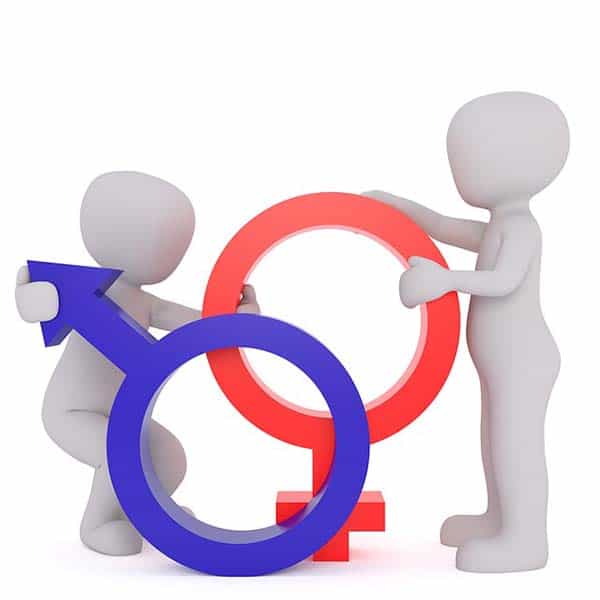
It’s about time we discuss the different types of equality that exist in diverse communities. This discussion will give a new dimension to the meaning and importance of equality.
So, below are the kinds of equality we find in societies around the globe.
1. Political equality
Without any further explanation, anyone can tell what political equality means. It means that every individual in society (citizens) should have the right to vote and hold political office in the said country. It does not matter what part of the country, or sex the individual belong. As long as he or she is qualified, nothing can stop their political ambition or ascension into a political office.
However, such rights are what should exist in a democratic setting. Individuals, particularly citizens, should have the free will to form political offices, vote and be voted into political office. It should not matter if they are male or female.
2. Natural equality
I would like to state that though natural equality is just an idea, it’s something we should take seriously. It’s what every state should strive to achieve to build a better society for her citizens.
The ideology behind this equality is that everyone is born equal and free. It means we are all blessed with similar talents and gifts. And as such, no individual is more superior to the other. We are all the same.
Natural equality seeks to encourage states to eliminate inequality as much as they can. The state shouldn’t be the one fueling inequality amongst citizens. So, every society or state must work hard to achieve natural equality, for the betterment of the populace and the country’s international reputation.
3. Civil equality
Civil equality is one concept that fits well in any democratic government. In this case, there’s no discrimination between two citizens, even though they are from different regions. Whether one is from New York or Texas, it doesn’t matter.
There’s no discrimination in this case. All citizens must be treated equally, irrespective of their belief, religion, financial status, skin color or race.
4. Social equality
Social equality, though difficult to attain, is one of the very critical equality in any society. What it implies is that every citizen should have the privilege to enjoy the diverse opportunities that exist in the said society.
How To Promote Equality In The Classroom
If we must fight racism or inequality, we must do so from the grass-root level, which is from elementary school. Students must be taught the importance of equality and how it can better our society. Equality means everyone is equality. So, even if one has a particular ability, it doesn’t make him or her different from the others in a negative way, but unique.
So, teachers must promote equality in the classroom. Let the student understand that it’s unwise and counterproductive to look down on others. Make them know that irrespective of sex, skin color, race, disability or religious belief, we all are one!
Now, how can teachers promote equality in schools?
- Ensure you challenge any negative attitude portrayed by any student.
- Consider the diversity of your classroom when planning your lessons.
- Don’t use learning material that discriminates against anyone in your classroom.
- Use diverse teaching and assessment methods.
- Create procedures and policies that do not discriminate against others.
- Teach students about equality. Let them understand that we are all equal, irrespective of our skin color, skill levels, and background of the family we belong.
- Rebuke any act of inequality displayed by anyone.
Ways A Lack Of Equality In Society Can Affect Us
Inequality is real. It still exists in many nations across the world. The funny thing is that creating such an atmosphere is a recipe for disaster. Nevertheless, we are encouraging it one way or the other in some society.
Why would humans promote inequality when it can have a severe negative impact? It can have adverse effects on the economy, society and individuals. Let’s look at some of the problems inequality can create for humans.
Inequality can lead to a higher crime rate
In a society where there’s inequality, there is bound to be higher crime rates. The bottom line is that lack of equality can increase violence and property crime. There’s also a view that when inequality is reduced from Spanish to Canadian levels, there’s bound to be at least a 20 per cent and 23 per cent reduction in homicides and robberies, respectively. So, the bottom line is, the rate at which crime or violence occurs in unequal societies is higher.
Inequality can impact the health of individuals
A society where the citizens are healthy will be more productive and economically viable. But, when reverse is the case, there’s bound to be a form of backwardness.
The bottom line is living in a society where there is inequality can make people unhealthy. There would be a high level of things like anxiety and stress, which can damage one’s health significantly. There’s also a high tendency for people in such regions to develop mental illness or obesity.
An equal society hardly experiences these things. People tend to live a bit longer and are far less likely to develop health issues that can reduce one’s quality of life. In such societies, everyone is treated equally, and as such, are friendly and happy.
Lack of equality affects one’s happiness, trust and perception of others
A society where there’s no equality might create room for people to start thinking differently about the people around them. It might also affect one’s level of happiness severely. When you are treated unequally, you may end up developing a negative feeling for those who feel they are more superior or privileged than you.
Individuals who live in unequal societies are also less likely to distrust each other. They may also not want to engage in a civic or social gathering or exude happiness. Such individuals can be dangerous to society, those around them and themselves.
Inequality can negatively impact the economic condition of any society
Inequality in any society creates room for economic instability. Such societies hardly progress economically, unless people are treated equally and given equal opportunity to express themselves. And a higher level of income inequality has been linked to several unpleasant developments such as financial crisis, inflation, rise in debt profile and economic instability.
Conclusion
“Why is equality important” is the topic of discussion. And as I said, for any society to progress economically, socially, educationally, technologically and health-wise, it must create room for equality to thrive. The quest to achieve an equal society shouldn’t be the government’s fight alone. Citizens also need to play their part in ensuring that effort to create an equal society is encouraged.
You May Like This Article As Well:
Is Investing In Stocks Worth It?